Two clutches shift smoother, one clutch is simpler to fix
A semi-automatic in the strict sense is an automated manual: one clutch, one set of gears, and actuators doing the footwork. A dual-clutch transmission uses two clutches so the next gear is engaged before you need it. The dual-clutch shifts faster and returns better fuel economy, and it's what most new paddle-shift cars have. The single-clutch automated manual pauses between gears, but it has fewer parts to fail and is cheaper to put right. If you already own either one, the real decision is keeping it healthy.
Semi-automatic vs. dual-clutch at a glance
"Semi-automatic" gets used loosely. Salespeople apply it to anything with paddles, even conventional automatics with a manual mode. Here, semi-automatic means an automated manual transmission (AMT): a manual gearbox with one clutch that a computer operates through electric or hydraulic actuators. Dual-clutch means a transmission with two clutches, one for the odd gears and one for the even, that pre-selects the next ratio. Here's how they compare.
| Point of comparison | Semi-automatic (AMT) | Dual-clutch (DCT) |
|---|---|---|
| What's inside | One clutch, one input shaft, actuators on the clutch and shift forks | Two clutches, two input shafts, a mechatronic control unit |
| Shift feel | A pause in power on every shift while the single clutch opens and closes | Near-seamless; the next gear is already engaged, so one clutch closes as the other opens |
| Low-speed behavior | Clutch slips to creep; can lurch in traffic and on hills | Wet units creep smoothly; dry units can shudder in traffic |
| Fuel economy | About the same as the manual it's based on | 3–4% better than a conventional automatic (DOE) |
| Clutch replacement | $1,356 – $1,749 (Smart Fortwo, RepairPal) | $1,115 – $1,407 and up (RepairPal's generic Ford Focus clutch estimate; a dual-clutch pack often runs higher) |
| Fluid service | Gear oil; follow the owner's manual | Wet units about every 40,000 miles (VW DSG); dry units often none scheduled |
Semi-automatic (automated manual) transmissions
An automated manual is the older and simpler idea: a stick shift with a robot working the clutch and the lever.
Single-clutch automated manual (AMT)
Underneath sits a manual gearbox with a single dry clutch. A control unit reads your throttle and paddle, opens the clutch, moves the shift fork, matches engine speed and closes the clutch again. With only one clutch, the engine is disconnected from the wheels for the length of every shift. On a quick system that gap is a fraction of a second; on a cheap one, the car nods forward on every upshift. Our post on how semi-automatic transmissions work covers the actuators and sensors.
Cars that used one, per the production history, include BMW's SMG in M cars from 1997 to 2010, Ferrari's F1 gearbox from the F355 on, Lamborghini's e-gear and Alfa Romeo's Selespeed, plus the Smart Fortwo and the 2002–2007 Toyota MR2 Spyder SMT at the economy end. These faded as dual-clutch units spread through the 2010s; the design lives on mostly in heavy trucks (Volvo I-Shift, Eaton, Detroit DT12), where a brief torque gap matters little.
The failure points are familiar to any manual owner. The clutch wears like any other, and because a computer slips it at every launch, it can wear faster in stop-and-go driving than under a careful foot. The actuators (electric motors, or a hydraulic pump and accumulator) and their position sensors are the other weak spot; out of calibration, they cause slow, harsh or missed shifts before anything is broken. The upside: a shop can usually re-teach the engagement point with a scan tool, and a worn clutch is a bounded repair.
Where it wins
- Fewer parts: one clutch and a set of actuators, no mechatronic unit inside the case
- Clutch replacement priced like a manual car, $1,356–$1,749 on a Smart Fortwo per RepairPal
- Shares parts and know-how with manual gearboxes, so rebuilt units are easier to find
Where it costs you
- A noticeable pause and head-nod on every shift, worse when the unit is cold
- Jerky creep in traffic and on hills, and the single clutch takes all of that heat
- Actuators and sensors need periodic adaptation, and a failed hydraulic unit can cost more than the clutch
Dual-clutch transmissions
A dual-clutch transmission fixes the automated manual's one big flaw by never fully letting go of the engine. It's sold as DSG, S tronic, PDK, PowerShift and more.
Dual-clutch transmission (DCT)
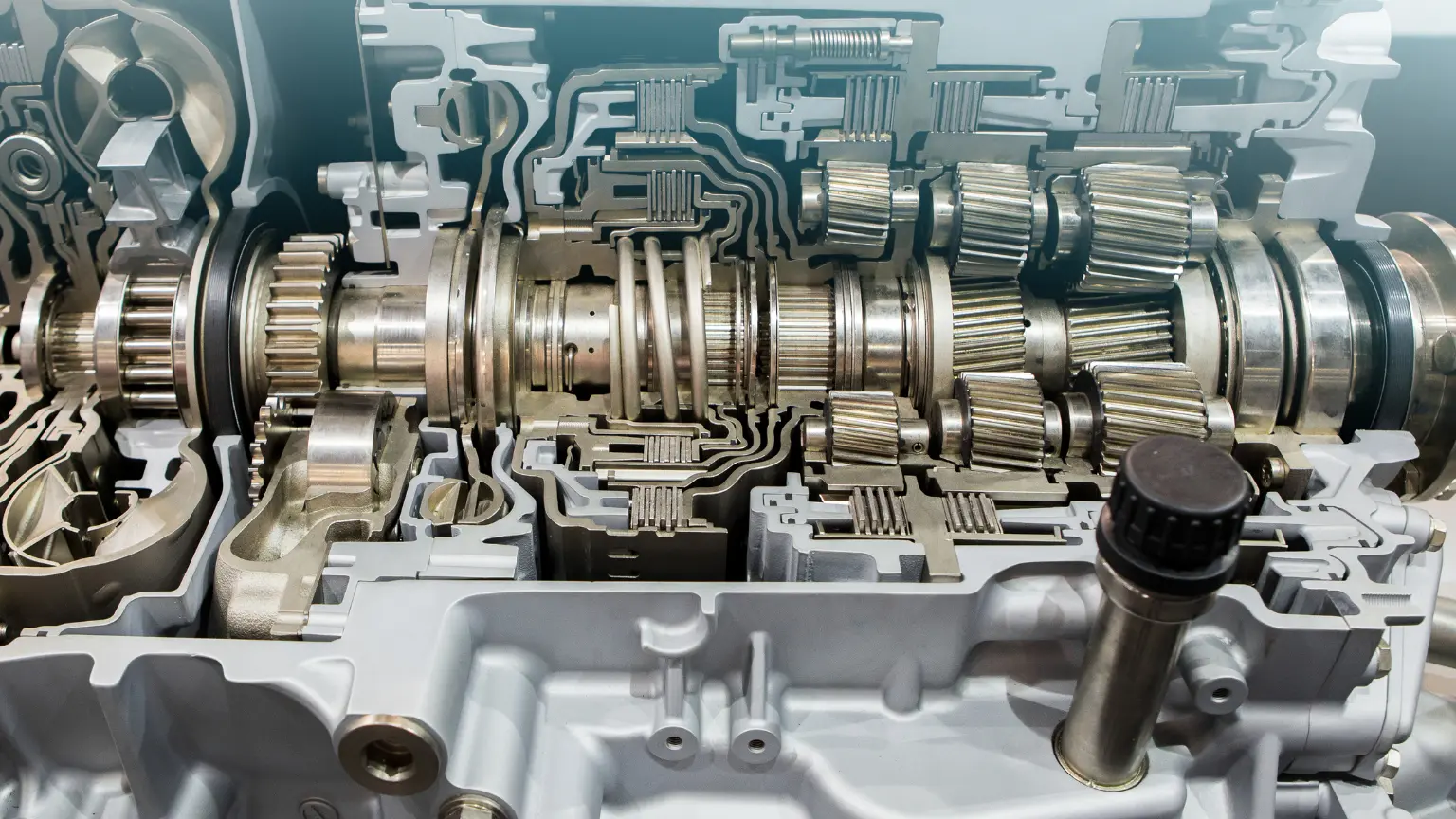
Inside are two clutches and two input shafts, one for the odd gears and one for the even gears and reverse. While you're in third, the computer has already engaged fourth on the other shaft, so the shift is one clutch opening as the other closes. Volkswagen put the first mass-production version in the 2003 Golf R32; Nissan's GT-R followed in 2007 and Porsche's PDK in 2009, then Audi, Hyundai and Kia, Mercedes-AMG, Ford's PowerShift compacts and the 2020 Shelby GT500. Our comprehensive guide to dual-clutch transmissions covers the mechanism in more depth.
The split that matters to an owner is wet versus dry. A wet clutch runs in oil that carries heat away; Volkswagen's six-speed DQ250 is rated for up to 260 lb-ft and holds about 7 liters of fluid. A dry clutch, as in VW's seven-speed DQ200 (up to 180 lb-ft) or Ford's DPS6, saves weight but has nowhere to shed heat. That decides low-speed manners: wet units creep out of a parking space about as smoothly as a conventional automatic, while dry units can shudder, hunt between first and second, and cook their clutches in traffic.
Ford's dry-clutch DPS6 in the 2011–2016 Fiesta and 2012–2016 Focus produced shudder, slipping and control-module failures serious enough that a class action settled for at least $77.4 million according to class counsel, approved March 5, 2020. Ford's own customer satisfaction programs extended coverage for clutch shudder, seal leaks and control modules that failed and cut engagement. Volkswagen's DSG has seen recalls for unplanned shifts to neutral and mechatronic wiring shorts traced to sulfur build-up in the fluid. The lesson is that the mechatronic unit (valve body, solenoids and control module in one assembly), the clutch packs and the fluid are where the money goes.
Where it wins
- Shifts with no gap in power, because the next gear is pre-selected
- 3–4% better fuel economy than a conventional automatic, per the U.S. Department of Energy; VW claims 6% better than its manual
- Wet-clutch units handle high torque and creep smoothly in traffic
Where it costs you
- The mechatronic unit is one expensive assembly, and a control module alone runs $929–$1,006 per RepairPal
- Dry-clutch units can shudder at low speed and wear their clutches quickly in city use
- Needs the exact specified fluid and, on wet units, a service interval you can't skip
Repair and service costs compared
They fail in different places, so the bills look different. These three national estimates from RepairPal cover parts and labor before tax and local adjustment, so treat them as the middle of the range rather than a quote.
What drives the bill
- Semi-automatic: the bill is usually clutch plus actuator. RepairPal puts a Smart Fortwo clutch at $1,356–$1,749, close to a manual car. A hydraulic actuator unit can add a second four-figure line, so have it tested first.
- Dual-clutch: the clutch pack is similar money on paper (RepairPal's generic Ford Focus clutch estimate is $1,115–$1,407, though a dual-clutch pack replacement on a PowerShift or DSG often runs higher), but the mechatronic unit is often the most expensive single item short of a full rebuild, and prices swing by brand. Ask whether it can be repaired rather than replaced.
- Fluid: a wet dual-clutch service costs more than a plain drain and fill because of the volume and the specific fluid required. VW's DQ250 takes about 5.5 liters at service; RepairPal's GTI estimate is $225–$280. Generic fluid is a common cause of clutch judder.
- Intervals: Volkswagen's schedule for its wet-clutch DSG calls for fluid and filter service about every 40,000 miles; confirm your model year in the owner's manual. Many dry-clutch units list no regular fluid change, so nobody looks inside until something fails.
Which one suits your driving
Choose a semi-automatic if…
You want the simplicity of a manual with an automated clutch, you drive mostly open roads where the shift pause doesn't bother you, and you'd rather have repairs priced like a manual car. In practice this means a used car, since new automated manuals are rare in the U.S., so budget for a clutch and actuator check.
Choose a dual-clutch if…
You want quick, seamless shifts and a few percent better mileage, you'll keep to the fluid interval, and you can pick a wet-clutch version if your commute is stop-and-go. Our post on selecting the right dual-clutch transmission covers the trade-offs model by model.
For most drivers shopping today, the dual-clutch is the one they'll actually find, and a wet-clutch unit with its fluid changed on schedule is a sound long-term choice. A single-clutch automated manual suits a budget used car or a 2000s performance car if you accept its shift character. What decides the ownership cost isn't the architecture but how early problems get diagnosed. Neither design tolerates the wrong fluid.
If your car shudders from a stop, hesitates between gears, or throws a transmission warning, don't wait for it to get louder. Slipping clutches and overheated fluid turn a modest repair into a rebuild on either design. Trans Medic Transmissions deals with all kinds of transmissions daily, dual-clutch units included, from fluid analysis and pressure testing through complete rebuilds with valve body recalibration, and can tell you which repair your transmission needs before you commit.
FAQ
Is a Dual-Clutch Transmission the Same as a Semi-Automatic?
Not strictly. A semi-automatic, properly called an automated manual, has one clutch that a computer operates, so power pauses on every shift. A dual-clutch transmission has two clutches and pre-selects the next gear, so one clutch closes as the other opens. Neither uses a torque converter, but they shift, wear and cost differently. A scan-tool check or the build sticker will tell a shop which you have.
Which Is More Reliable, a Semi-Automatic or a Dual-Clutch Transmission?
It depends more on the specific unit than the design. Single-clutch automated manuals have fewer parts, and their usual failures (clutch wear, actuator calibration) are inexpensive to diagnose. Dual-clutch units vary: wet-clutch versions with regular fluid service tend to age well, while some dry-clutch units, such as Ford's DPS6, had well-documented shudder and control-module problems. Fluid quality, heat and driving pattern matter more than the label.
How Often Does a Dual-Clutch Transmission Need Fluid Service?
Follow the owner's manual for your exact model. Volkswagen's schedule for its wet-clutch DSG units calls for a fluid and filter change at about 40,000-mile intervals, and other wet-clutch designs follow similar logic since the fluid cools the clutches. Many dry-clutch units list no regular fluid change, so problems are often found late. If you tow, sit in traffic or drive in hot weather, servicing sooner is money well spent.
Can a Dual-Clutch or Semi-Automatic Transmission Be Rebuilt Instead of Replaced?
Yes, both designs are rebuildable. Clutch packs, bearings, seals, solenoids, actuators and often the mechatronic unit can be repaired or replaced individually, and the control unit is recalibrated afterward so the new clutches engage at the right point. A rebuild usually costs less than a new assembly and fixes only what failed. Ask for a written diagnosis first.