How Semi-Automatic Car Transmissions Work: An In-Depth Look
Learn how semi automatic transmissions work, from single clutch AMTs to dual clutch DCTs and Tiptronic style manual modes. Compare benefits, drawbacks, and what to maintain for long term reliability.
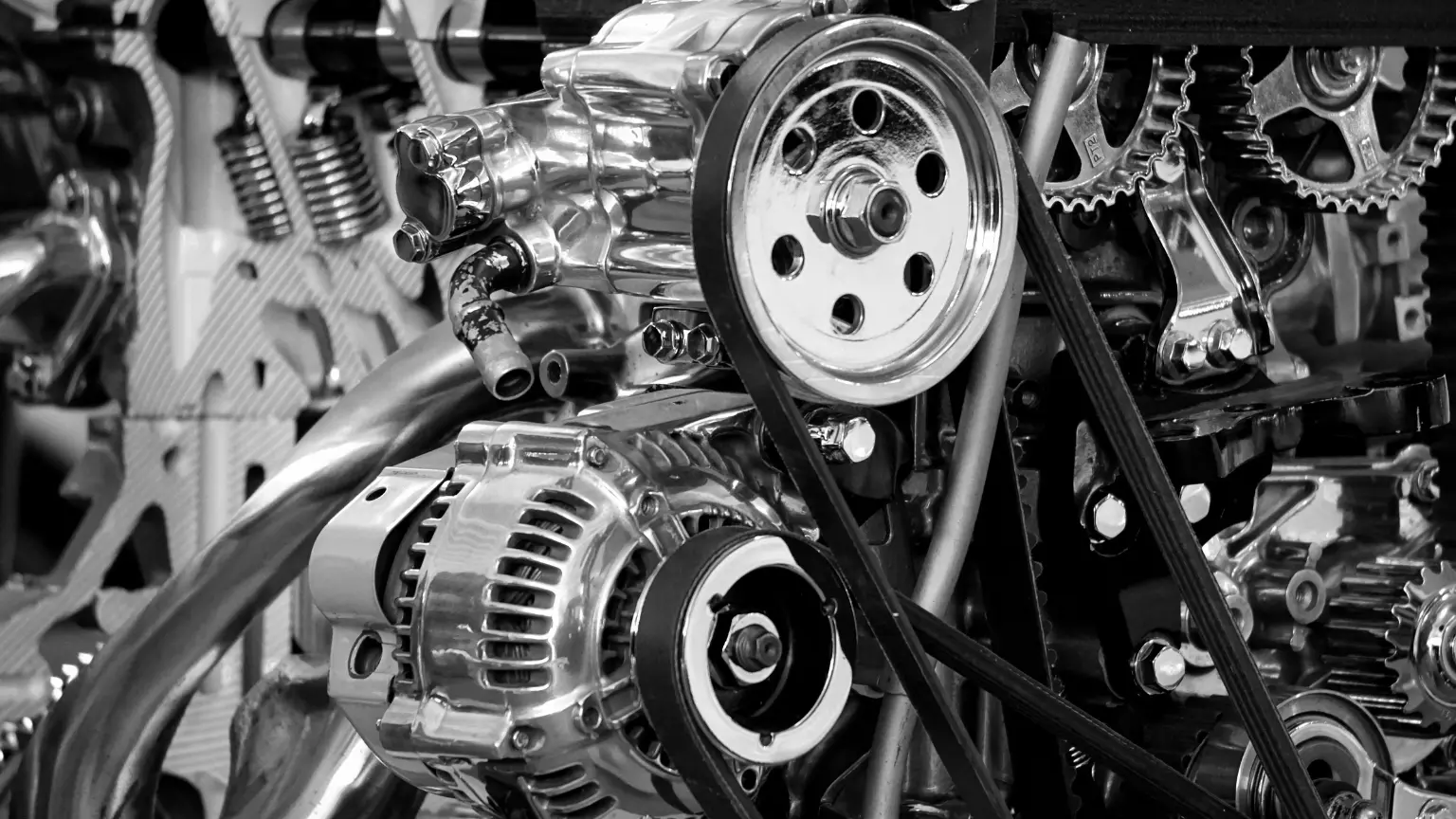
Semi-automatic car transmission technology offers a unique blend of manual control and automatic convenience, essentially giving drivers the best of both worlds on the road. It lets you shift gears like a manual but without a clutch pedal. Instead, an onboard computer and actuators handle clutch engagement and gear shifting based on your inputs. This is why it’s often called a clutchless manual transmission or an automated manual transmission, emphasizing that the core is a manual gearbox with electronics doing the clutch work. Whether you’re accelerating onto a highway or crawling in stop-and-go traffic, semi-automatics aim to combine the engaging feel of a stick-shift with the ease of an automatic.
How Semi-Automatic Transmissions Work
In a fully manual car, the driver presses a clutch pedal to disengage the engine and manually moves a stick shift to change gears. A semi-automatic setup automates those actions: an electronic clutch actuator takes over the clutch pedal’s job, and electronic or hydraulic mechanisms handle the gear selection. The vehicle’s computer uses sensors and actuators to perform the functions your left foot and right hand would normally perform in a stick-shift car. Mechanically, the transmission still has a clutch and set of gears like a normal manual, but the engagement of that clutch and the shifting of gears are performed by the car’s systems.
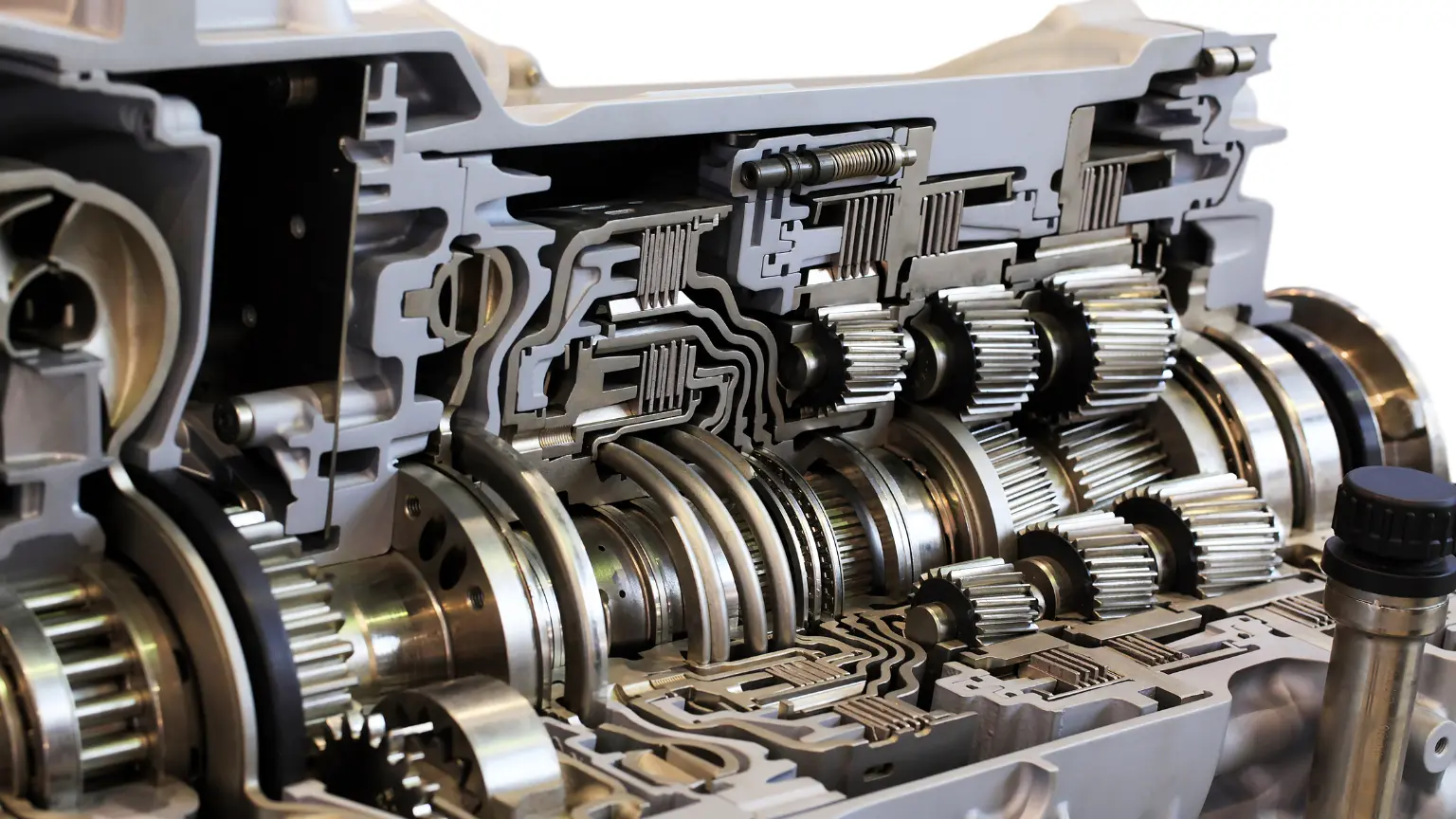
An easy way to picture this is to imagine a regular manual gearbox with two of its key controls replaced by robots. The clutch pedal is gone. Instead, a sensor-and-actuator system engages or disengages the clutch automatically whenever a gear change is needed. The physical linkage of the gear lever is replaced by servo motors or hydraulics that move the gears in and out of mesh. This design is essentially what you get in an automated manual transmission (AMT): a manual transmission housing with add-ons that let it shift itself. An AMT is literally a manual transmission with electronically controlled clutch and gear actuators, where the conventional clutch pedal and gear lever are swapped out for automated actuators. The driver still indicates when to shift, but the heavy lifting is done by the car’s computer and actuator hardware.
One key characteristic of these systems is that power flow from the engine to the wheels is momentarily interrupted during gear changes. When an AMT or any single-clutch semi-automatic shifts, it must briefly open the clutch to change gears. During that moment, engine power isn’t driving the wheels. This pause is often called a torque interruption in AMT shifts, and it can sometimes be felt as a slight jolt or hesitation, very much like an inexperienced driver’s gear change. Manufacturers program transmission control units to minimize torque interruption as much as possible, but it is inherent because there’s only one clutch managing all the gears.
Automated Manual Transmissions (AMT)
The most common form of semi-automatic in everyday cars is the single-clutch automated manual transmission. When you, as the driver, indicate you want to shift, the car’s computer (sometimes called the Transmission Control Unit or TCU) does the rest. It cuts engine torque for a split second, operates the clutch via the actuator, shifts the gear, then re-engages the clutch. In fully automatic mode, the computer can even decide when to shift on its own, based on speed and throttle input, without any driver involvement. Gear changes in AMT systems are carried out by electronics following the driver’s intent, rather than by the driver’s hand and foot.
One advantage of AMTs is that they combine the fuel efficiency of a manual transmission with the convenience of an automatic. Because an AMT lacks a fluid torque converter, it transmits power more efficiently. The AMT transmission efficiency gains come from its direct mechanical connection. When the clutch is engaged, it’s just like a manual gearbox locking the engine and wheels together. This means minimal slippage, often resulting in better gas mileage compared to older torque-converter automatics. In city driving, an AMT frees you from constant clutch and gear lever work, yet it can deliver mileage numbers similar to a stick shift. However, there are trade-offs. The most noticeable drawback is the momentary pause or jolt during shifts. High-end modern AMTs mitigate this with clever programming, but many early versions had a reputation for jerky shifting. Drivers would feel the car lurch a bit with each automatic shift, especially at low speeds, because the single clutch had to disengage and re-engage each time.
Despite that quirk, AMTs have been popular in certain segments of cars. These units are cheaper and lighter than traditional automatics, making them attractive for small cars where cost and efficiency are top priorities. Many entry-level cars in Europe and Asia adopted robotized gearboxes to offer an automatic-like experience at a lower price point. By the mid-2010s, some automakers began shifting to more sophisticated dual-clutch units in their higher-end models, but the simpler AMT remained popular in smaller cars and developing markets due to its lower cost. You might find an inexpensive city car or family hatchback advertising an “automatic” that is actually an AMT under the hood, giving you clutch-free driving without the expense or weight of a fully hydraulic automatic. This prevalence of the robotized gearbox in compact cars shows that AMTs successfully carved out a niche where efficiency and affordability matter more than ultra-smooth performance.
Dual-Clutch Transmissions (DCT)
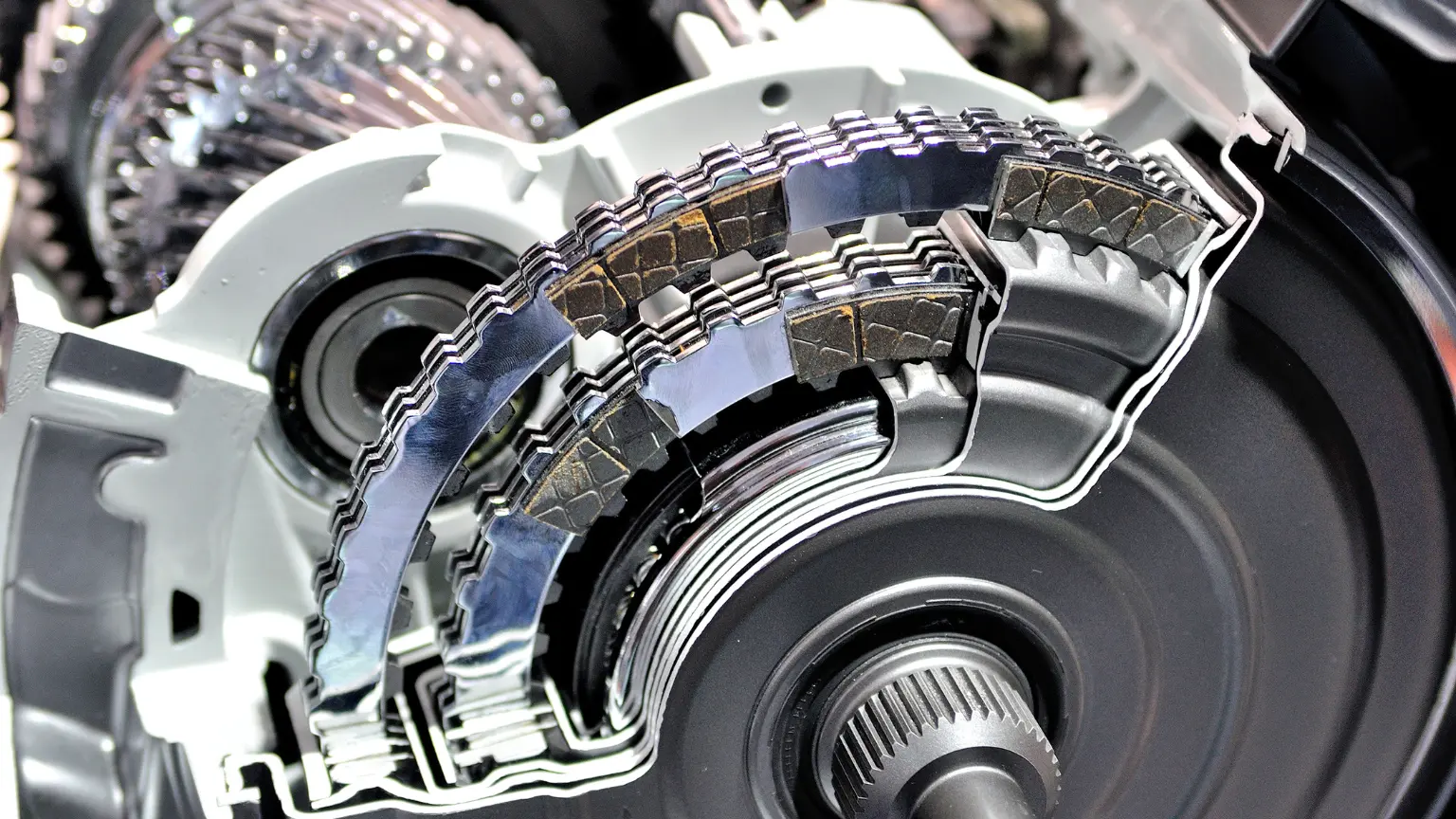
While AMTs use one clutch to handle all gear shifts, a dual-clutch transmission (DCT) ups the game by using two clutches. A DCT is a more advanced type of semi-automatic that eliminates the power loss during gear changes. How? It employs two separate clutches. One for the odd-numbered gears and another for the even-numbered gears. The design is ingenious: one clutch can be engaged with the current gear while the second clutch already has the next gear pre-selected. When it’s time to shift, the system simply swaps which clutch is engaged, seamlessly transferring power to the next gear almost instantaneously. Because of this, clutch engagement in DCT units is orchestrated such that one clutch is always connecting the engine to a gear. There’s virtually no gap in power delivery during shifts – no perceptible “pause” like you get with a single-clutch system. The result is lightning-fast gear changes with no torque interruption in between.
Driving a DCT feels very smooth under acceleration. As you upshift, the next gear is already engaged and waiting, so the transition is fluid and shock-free. The shift timing in DCT gearboxes can be incredibly quick, far faster than even the best human driver with a manual clutch. Some sports cars with DCTs boast gear-change times of 50–100 milliseconds, delivering uninterrupted acceleration. This quick shifting not only improves performance but also maintains efficiency by avoiding the energy losses of a slipping clutch or torque converter. It’s no surprise that many high-performance and luxury cars have adopted DCTs for their ability to provide both smooth automatic operation and rapid-fire manual-style shifts.
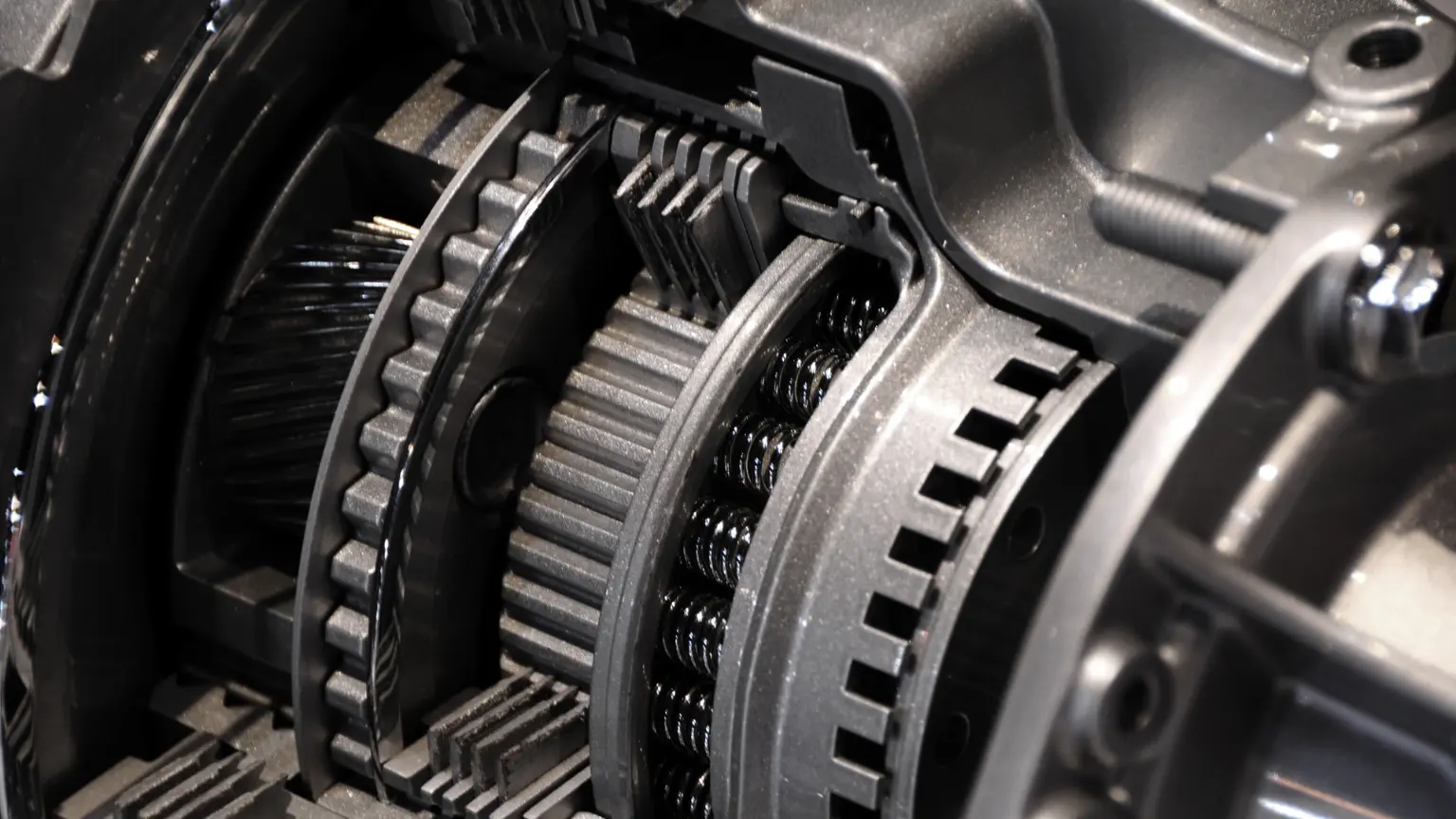
Mechanically, a dual-clutch transmission is like two manual gearboxes in one housing – typically one gearbox handles 1st, 3rd, 5th with one clutch, and the other handles 2nd, 4th, 6th with the second clutch. They often share internal components but have a twin-input-shaft setup to allow two gears to be ready at once. The difference between AMT and DCT is that an AMT still only has one clutch doing all the work, whereas a DCT’s twin clutches mean it’s always a step ahead on the next gear.
It’s worth noting that DCTs are often referred to by proprietary names: Volkswagen’s well-known DSG (Direct-Shift Gearbox) is a dual-clutch, and other automakers have their own acronyms. They all operate on the same principle of dual clutches. The advantages of semi-automatic transmissions are most pronounced in DCTs. You truly get a blend of manual performance and automatic ease. There is no torque converter, and shifts are computer-precise.
Tiptronic and Other Manumatic Systems
Not all semi-automatic transmissions are based on modifying a manual gearbox. Some are actually derived from traditional automatics but give the driver manual control. A well-known example is the Tiptronic transmission system. The Tiptronic transmission system basics are that it’s a standard automatic transmission that allows manual gear selection by the driver. In a Tiptronic or similar manumatic setup, there is no clutch pedal either. Because, under the skin, it’s still a hydraulic automatic. The driver can upshift or downshift by toggling the gear lever or using paddles, and the car’s computer will execute that request if it’s safe for the engine. Unlike an AMT or DCT, these systems do have a torque converter and will override the driver if a gear choice would damage the engine.
Paddle shifters on semi-automatics can refer to any system where you have paddles to request shifts, be it a dual-clutch, AMT, or Tiptronic-style auto. The paddles themselves are just input devices. What’s happening behind the scenes depends on the transmission type. In high-end sports cars and race cars, paddle shifters usually control a DCT or a sequential gearbox. In many consumer cars, paddle shifters might simply interface with a conventional automatic transmission’s control unit. So “paddle shift” doesn’t automatically mean the car has an AMT or DCT – it might, or it might just be giving you manual control of an automatic.
A true semi-automatic in the original sense typically referred to systems like those we’ve described, manual systems with automated clutches. For example, some 1950s cars had auto-clutch systems where pressing the gear lever itself would trigger an electronic clutch. Today, however, most people discussing semi-automatics are usually talking about either single-clutch AMTs or dual-clutch gearboxes. The manual mode on semi-automatics is a selling point. It gives the driver the choice to let the car shift on its own in traffic or enjoy a more engaged driving experience by shifting manually via lever or paddles when desired.
Advantages of Semi-Automatic Transmissions
Why choose a semi-automatic setup over a purely manual or purely automatic one? There are several notable benefits of these hybrid systems:
- Convenience: Perhaps the biggest draw is not having a clutch pedal to constantly operate. In daily driving, this is a knee-saver and simply less fatiguing. A semi-automatic lets the car handle the clutch work, so stop-and-go commutes are much easier compared to a stick shift. You can drive in full automatic mode when you just want it to behave like a regular automatic car.
- Driver Engagement on Demand: Unlike a traditional automatic that decides everything, a semi-automatic gives you the option to take control. The manual mode on semi-automatics means you can shift gears when you want to, using paddles or the gear lever, without needing to coordinate a clutch. For an enthusiast, this adds fun and control. You can downshift before a corner or hold a gear for performance.
- Performance and Shift Speed: Many semi-automatic systems shift extremely quickly and consistently. A computer-controlled gearbox can execute a perfect upshift in milliseconds, far faster than most humans can with a clutch pedal. This translates to better acceleration and even a slight edge in fuel efficiency. There’s also no risk of “missing a gear.” With paddle shifters on semi-automatics, gear changes are as simple as a click, and the system handles the timing flawlessly every time.
- Fuel Efficiency: As noted earlier, systems like AMTs and DCTs often have efficiency advantages. Without a torque converter’s slip, more of the engine’s power makes it to the wheels. These AMT transmission efficiency gains make semi-automatics appealing for eco-conscious drivers who don’t want the hassle of a manual.
- Smoothness (in certain designs): While early single-clutch systems had jerky moments, many modern semi-automatics are tuned to be very smooth. Dual-clutch systems can be nearly imperceptible in their shifting, especially the refined “wet clutch” versions in luxury cars. You get seamless acceleration without the shift shock of a manual. Even systems like Tiptronic automatics are engineered to blend comfort with manual control, so you don’t give up the smooth ride of a traditional automatic.
For most drivers, the advantages of semi-automatic transmissions in everyday use far outweigh those compromises, offering an excellent balance of comfort and control.
Semi-automatic transmissions represent a clever intersection of old and new. They marry the tried-and-true mechanical efficiency of manual gearboxes with modern electronic control and automation. We’ve looked at two primary forms: the single-clutch clutchless manual transmission (AMT) and the twin-clutch dual-clutch transmission, as well as their cousin, the Tiptronic-style automatic with manual mode. Each brings something valuable to the table, whether it’s the low cost and simplicity of an AMT or the high-performance seamless shifting of a DCT. For drivers, the appeal is clear. You can enjoy a more engaging drive when you want, without the learning curve or the workout of a fully manual car, and without sacrificing fuel economy as you might with some traditional automatics.
If you have questions about your transmission or need service for one of these modern gearboxes, it’s wise to consult professionals who understand their complexity. Trans Medic Transmissions deal with all kinds of transmissions daily and can help with maintenance or issues specific to semi-automatics. As with any advanced automotive system, proper care and occasional software updates can keep a semi-automatic performing at its best. With the right knowledge and support, you can fully enjoy the benefits of your semi-automatic transmission for years to come.
Sources
- HowStuffWorks – How Dual-Clutch Transmissions Work
- x-engineer.org – Automated Manual Transmission (AMT)
- Wikipedia – Automated manual transmission
- Hyundai Newsroom – How dual-clutch transmission works
- HowStuffWorks – How Sequential Gearboxes Work
- TREMEC Blog – The Differences Between a DCT and a Traditional Automatic Transmission
Follow a maintenance program
Ante gravida id aenean quis egestas risus nam amet nullam leo diam diam aliquam eu eu malesuada arcu rhoncus suspendisse nulla mattis ut amet sagittis in justo egestas.
search for a trusted mechanic
Lorem ipsum dolor sit amet, consectetur adipiscing elit lobortis arcu enim urna adipiscing praesent velit viverra sit semper lorem eu cursus vel hendrerit elementum morbi curabitur etiam nibh justo, lorem aliquet donec sed sit mi dignissim at ante massa mattis.
- Neque sodales ut etiam sit amet nisl purus non tellus orci ac auctor
- Adipiscing elit ut aliquam purus sit amet viverra suspendisse potent
- Mauris commodo quis imperdiet massa tincidunt nunc pulvinar
- Excepteur sint occaecat cupidatat non proident sunt in culpa qui officia
Check the air pressure in your tires
Vitae congue eu consequat ac felis placerat vestibulum lectus mauris ultrices cursus sit amet dictum sit amet justo donec enim diam porttitor lacus luctus accumsan tortor posuere praesent tristique magna sit amet purus gravida quis blandit turpis.
Review your suspension frequently
At risus viverra adipiscing at in tellus integer feugiat nisl pretium fusce id velit ut tortor sagittis orci a scelerisque purus semper eget at lectus urna duis convallis. porta nibh venenatis cras sed felis eget neque laoreet suspendisse interdum consectetur libero id faucibus nisl donec pretium vulputate sapien nec sagittis aliquam nunc lobortis mattis aliquam faucibus purus in.
- Neque sodales ut etiam sit amet nisl purus non tellus orci ac auctor
- Adipiscing elit ut aliquam purus sit amet viverra suspendisse potent
- Mauris commodo quis imperdiet massa tincidunt nunc pulvinar
- Excepteur sint occaecat cupidatat non proident sunt in culpa qui officia
Service your vehicle as regularly as posible
At risus viverra adipiscing at in tellus integer feugiat nisl pretium fusce id velit ut tortor sagittis orci a scelerisque purus semper eget at lectus urna duis convallis. porta nibh venenatis cras sed felis eget neque laoreet suspendisse interdum consectetur libero id faucibus nisl donec pretium vulputate sapien nec sagittis aliquam nunc lobortis mattis aliquam faucibus purus in.
“Nisi quis eleifend quam adipiscing vitae aliquet bibendum enim facilisis gravida neque velit euismod in pellentesque”
Conclusion
Eget lorem dolor sed viverra ipsum nunc aliquet bibendum felis donec et odio pellentesque diam volutpat commodo sed egestas aliquam sem fringilla ut morbi tincidunt augue interdum velit euismod eu tincidunt tortor aliquam nulla facilisi aenean sed adipiscing diam donec adipiscing ut lectus arcu bibendum at varius vel pharetra nibh venenatis cras sed felis eget.