A rebuild repairs your transmission; a reman swaps it for someone else's
A rebuilt transmission is your own unit, torn down and reassembled by a local shop with the worn and failed parts replaced. A remanufactured transmission is an exchange unit that a factory or reman facility has restored to spec on a production line, usually with every wear part replaced, known updates applied, a core charge on the invoice, and a nationwide warranty. For most out-of-warranty cars and trucks, a quality local rebuild is the better value: you pay for what your transmission actually needs, and the people who built it stand behind it. A reman unit earns its higher price when the transmission is rare, the hard parts are beyond saving, or you need a warranty that travels with the vehicle.
Rebuilt vs. remanufactured at a glance
Shops use the two words loosely. The table compares what you actually receive with each option, using published cost ranges and the terms remanufacturers and shop networks print on their own pages.
| What you're comparing | Rebuilt (your unit, local shop) | Remanufactured (exchange unit) |
|---|---|---|
| What you get back | Your original transmission, torn down, inspected, and reassembled with failed and worn parts replaced | A different unit of the same model, restored to factory spec on a production line |
| Typical cost | $2,000 – $4,500 (AAA, 2025) | $2,900 – $7,100 (Kelley Blue Book replacement average) |
| Turnaround | About 3–5 days of shop time for a common unit | 1–2 days to install; stock units ship in a day or two, special builds about a week |
| Core charge | None, you keep your own transmission | Billed up front, credited when the old unit comes back complete and undamaged |
| Warranty | Set by the shop; network plans run 1 year / 12,000 miles to 3 years / 100,000 miles | Commonly 3 years / 100,000 miles nationwide, parts and labor |
| Testing and updates | Pressure-tested and road-tested; updates at the builder's judgment | Known updates applied as standard; dyno-tested under load before shipping |
What a local rebuild really includes
"Rebuilt" covers a wide range of work, from a quick seal-and-clutch kit to a complete overhaul. That range is why the label alone tells you little, and why the shop you pick matters more than the word on the invoice.
Rebuilt transmission (your own unit)
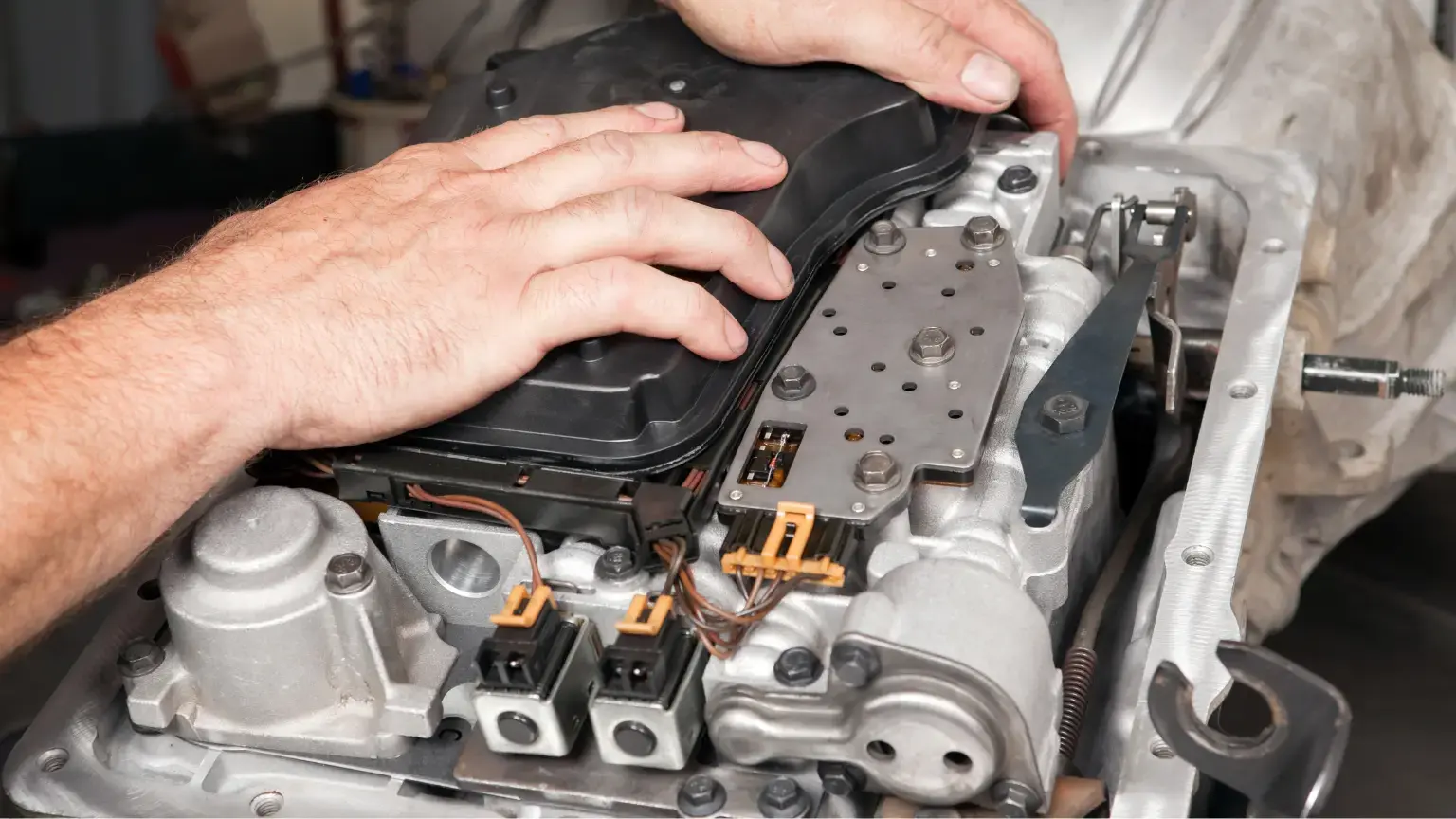
Kelley Blue Book defines a rebuild as "inspecting and replacing only the parts that have failed" and calls it the least expensive path. A thorough shop goes well past that minimum. A complete rebuild starts with a full teardown, cleaning, and magnetic particle inspection, then replaces clutch packs, steels, bearings, seals, and gaskets with OEM-spec or performance-grade parts, recalibrates the valve body, tests the torque converter, pressure-tests the unit, and road-tests the car.
The practical advantage is that the builder sees exactly why your unit failed. Burned clutches tell a different story than a cracked drum or a worn pump, and the repair can include the cause, whether that's a clogged cooler, low line pressure, or neglected fluid. You also keep a transmission that already matches your vehicle, and nothing has to be crated and shipped.
The trade-off is that quality rests on one shop and one builder. Before you approve the work, ask which hard parts were inspected, whether the converter is replaced or tested, and what happens if the teardown turns up more damage. AAA puts a typical rebuild at $2,000 to $4,500, with the vehicle, the transmission design, and the extent of damage deciding where you land.
Where it wins
- You pay for what your unit needs, not a flat exchange price
- The builder finds the root cause and can fix it in the same job
- No core charge, no freight, no waiting on a truck
- Local accountability: warranty work goes back to the people who did the work
Where it costs you
- Quality varies shop to shop, so you have to vet the builder
- Your car sits while the teardown and rebuild happen
- Hard-part surprises can raise the quote mid-job
What a remanufactured unit really includes
A remanufactured transmission is not your transmission repaired. It is a core someone else sent in, rebuilt in a facility set up to do that model over and over, and sold to your installer as an exchange unit.
Remanufactured transmission (exchange unit)
Kelley Blue Book describes remanufacturing as "completely restoring your transmission back to factory standards," performed at a factory assembly line, and the most expensive option. Jasper, which describes itself as the nation's largest remanufacturer, spells out what that means on its product page: wear parts are replaced with new or qualified parts, the case, pump, converter, and valve body are remanufactured to tolerance, transmission-specific updates are built in, and every automatic unit is dynamometer-tested under load before it ships.
The warranty is the main selling point. Jasper covers most applications for 3 years or 100,000 miles, parts and labor, nationwide, with commercial vehicles at 18 months or 100,000 miles. Availability is the other selling point: popular applications are in stock and ship in a day or two, while less common builds take about a week. Installation on top of that typically runs one to two days.
The line people miss is the core. Jasper bills a core and skid charge at the time of sale and credits it when your old unit comes back within 30 days, matches the unit you bought, and arrives drained, strapped to the skid, and complete. Damaged cases, missing parts, and disassembled units bring extra charges, and Transmission Digest notes that each remanufacturer sets its own acceptance standard, so a unit that ran dry or overheated may not earn a full credit.
Where it wins
- A consistent, documented process with dyno testing on every unit
- Known factory updates are already built in
- A long nationwide warranty that follows the vehicle
- The shortest downtime when the unit is in stock
Where it costs you
- The highest price of the repair, rebuild and reman options
- A core deposit tied up until your old unit is accepted
- The installer and the builder are different companies, so a warranty claim runs through both
Cost, core charges, and what the quote leaves out
Removing and reinstalling a transmission takes about the same labor either way. What changes is what you pay for while it's out: a builder's time and the parts your unit needs, or a finished exchange unit plus freight and a deposit.
Ask the installer for the exact deposit; Jasper publishes its own return terms
Read a reman quote line by line: the unit, freight, the core deposit and its return terms, installation labor, fluid, and a cooler flush. A rebuild quote lists labor, the soft-parts kit, any hard parts found at teardown, and the converter. That second list is harder to pin down before teardown, so a good shop quotes a range and calls before adding hard parts. What changes a rebuild quote is mostly the vehicle type and how far the damage spread.
Warranties in plain terms
A 3-year, 100,000-mile reman warranty reads better than many local rebuild warranties, but compare the coverage, not the headline. Ask whether labor and towing are covered, and who you call if you break down two states away. Local shops can match the reach: the ATRA Golden Rule Warranty is honored at more than 1,000 participating ATRA member shops across North America and comes in tiers from 1 year / 12,000 miles up to 3 years / 100,000 miles, with parts, labor, and fluid included. Every shop sets its own terms, so ask before you sign and get them in writing.
Turnaround
A straightforward rebuild of a common unit usually spans a few days to a week of shop time, longer if parts are backordered. A reman unit in stock can be installed a day or two after it arrives, which is where the supplier's speed claim comes from. If your unit isn't in stock, the clock runs about a week before the installer sees it, and the advantage disappears.
Which one should you choose?
Choose a local rebuild if…
Your vehicle is out of warranty, the transmission is a common design, the case and major hard parts are intact, and you want to pay for the parts your unit actually needs. It's also the better fit when you want the builder to find and fix the cause of the failure, with one local shop responsible for the work and the warranty.
Choose a remanufactured unit if…
The transmission is rare, obsolete, or a design local shops can't source parts for, the case is cracked or the hard parts are destroyed, or you're about to move or travel and need a warranty that any installer across the country will honor. It also makes sense when the unit is in stock and two days of downtime matters more than the extra cost.
Whichever way you lean, don't decide on the label. Get the transmission diagnosed first, because a slipping or hard-shifting unit sometimes needs a repair rather than a rebuild or a replacement, and a shop that checks pressures and road-tests the car can tell you which. Catching the problem early keeps hard parts out of the quote and keeps both options open.
Trans Medic Transmissions rebuilds automatic, diesel, and foreign transmissions every day in Gresham and can tell you whether your unit is a good rebuild candidate before you commit to either path. If a reman unit is the right call, a good shop will say so.
FAQ
Is a Remanufactured Transmission Better Than a Rebuilt One?
Not automatically. A reman unit comes with a consistent process, dyno testing, and a long nationwide warranty, but it costs more and replaces your transmission with someone else's core. A complete rebuild by a skilled local shop replaces the same wear parts, addresses the cause of the failure, and costs less. The better choice depends on the vehicle, how rare the unit is, and how much warranty reach matters to you.
What Is a Transmission Core Charge and Do I Get It Back?
A core charge is a deposit a remanufacturer bills when you buy an exchange unit, because it needs your old transmission to rebuild for the next customer. Jasper, for example, bills it at the time of sale and credits it when the core comes back within 30 days, matching the unit purchased, drained, and complete. Damaged cases or missing parts reduce the credit, and each remanufacturer sets its own rules.
Does a Rebuilt Transmission Come With a Warranty?
It should, and the terms vary by shop. Network plans such as the ATRA Golden Rule Warranty run from 1 year / 12,000 miles to 3 years / 100,000 miles, cover parts, labor, and fluid, and are honored at participating member shops across North America. Ask any shop what its rebuild warranty covers, whether labor is included, and whether it is honored away from home, and get the answer in writing.
Is a Remanufactured Transmission the Same as a New One?
No. Kelley Blue Book notes that brand-new transmissions are mostly reserved for new cars, and that a shop quoting a "new" transmission usually means a rebuilt or remanufactured unit. A reman unit starts as a used core and is restored to factory specifications with new wear parts and updates, then tested. It is built and warranted to perform like new, but the case and many hard parts have been in service before.