Delayed Shifting: Common Causes And When It Becomes Urgent
Understand delayed shifting causes like low fluid, worn parts & control faults, plus signs it’s urgent so you can avoid major damage
For many drivers, one of the common transmission problems they may face is delayed shifting. This is an automatic transmission delay in the vehicle’s response when changing gears. Such an issue can be more than a minor annoyance, as it often indicates an underlying fault that could worsen if left unaddressed. Understanding what causes delayed shifting and recognizing when it’s an urgent concern will help you keep your car safe and avoid expensive damage. Let’s break down why your transmission might hesitate to shift and what you should do about it.
What Is Delayed Shifting?
Delayed shifting refers to a noticeable lag between the moment you shift your car into gear and the moment the transmission actually engages that gear. In an automatic car, you expect the vehicle to move almost immediately when you shift into Drive or Reverse. With delayed shifting, you might shift from Park into Drive and then wait a few seconds before the car starts to creep forward. Or you might be accelerating while driving and feel the car hesitate or hang longer than normal before the next gear finally kicks in. This delay is known as delayed engagement, and it’s actually a pretty common issue among automatic transmissions. Something within the transmission is causing it to pause instead of shifting promptly.
Drivers experiencing delayed shifting often describe the car as feeling unresponsive or “sluggish.” You might press the gas, and the engine revs, but the car doesn’t immediately move forward. Then suddenly, the gear catches, sometimes with a mild jolt or clunk as it engages. Importantly, this is not usually a normal behavior. Modern automatic transmissions are designed to shift gears almost instantaneously and smoothly. Any significant lag indicates that the transmission is struggling. In manual transmission vehicles, a comparable issue might be a slipping clutch, but in an automatic, delayed shifting is a telltale sign of a problem in the drivetrain.
It’s worth noting the difference between a slight idle hesitation and true delayed shifting. For example, on a very cold morning, you might notice a slight hesitation when first putting the car in gear. This is somewhat normal as cold, thick fluid circulates. However, if your transmission consistently takes more than a couple of seconds to engage or requires you to rev the engine to make it engage, that’s a red flag. Delayed shifting is more than just an inconvenience. It’s your vehicle’s way of signaling that something isn’t operating correctly in the transmission system.
Common Causes of Transmission Shifting
There’s no single culprit behind delayed shifting. This symptom can arise from a variety of issues within the transmission. These causes fall into a few categories: transmission fluid problems, mechanical wear-and-tear, or electrical/control system faults. Below, we’ll explore the most common causes of delayed shifting and how they lead to that lag when you’re trying to get in gear:
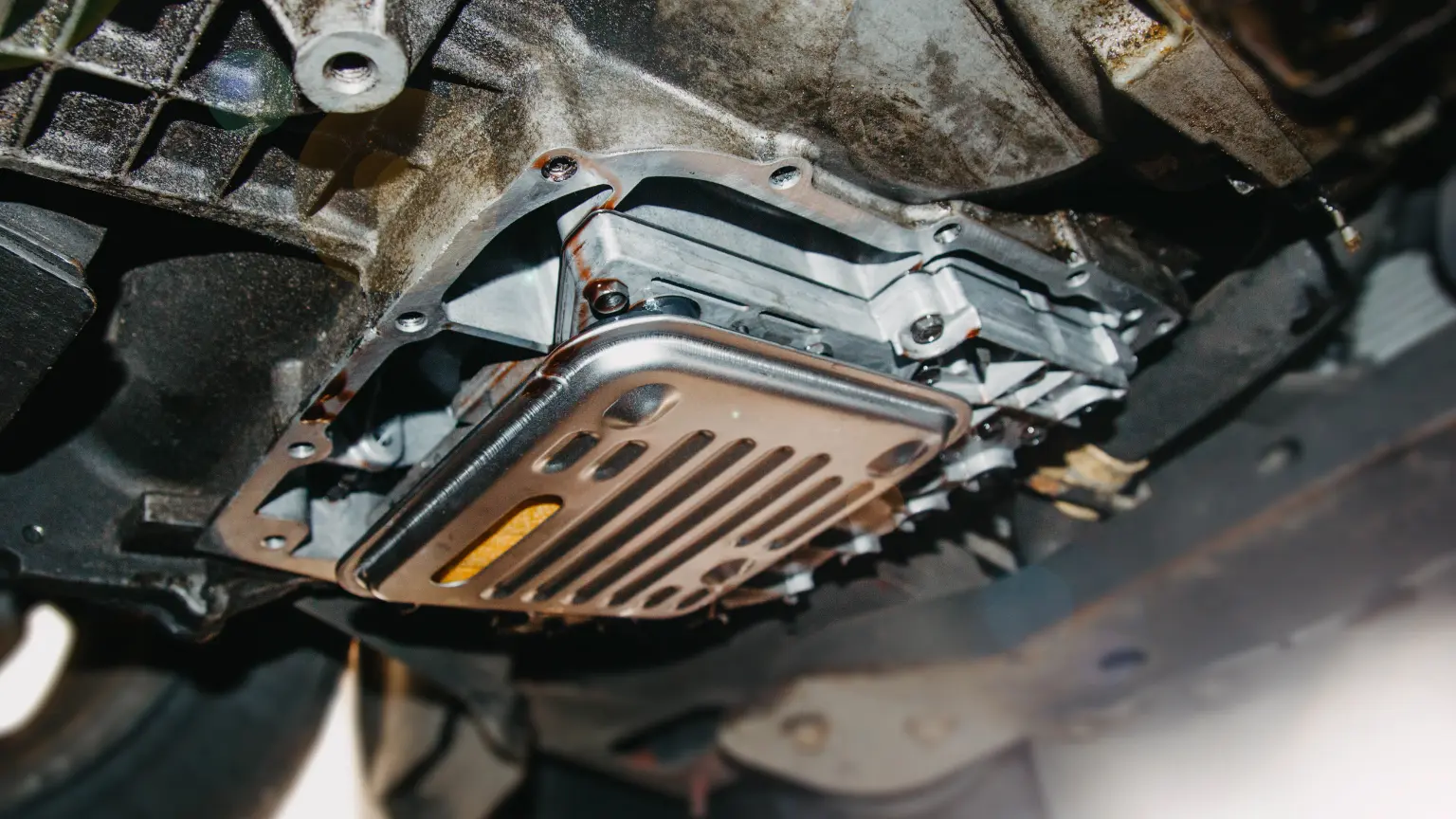
- Low or Dirty Transmission Fluid: The transmission relies on fluid for hydraulic pressure, lubrication, and cooling. If the fluid level is low or the fluid is old and contaminated, the transmission can’t build adequate pressure to shift promptly. A low fluid condition is often caused by a transmission fluid leak, whether from a transmission pan leak or another transmission seal leak. When fluid escapes and the level drops, there isn’t enough hydraulic force to engage the gears on time, resulting in hesitation. Dirty or burned fluid can’t flow properly and may cause valves and passages to stick or clog, leading to delayed or harsh shifts.
- Worn Internal Components: Inside an automatic transmission are multiple clutch packs, bands, seals, and valves that work together to change gears. Over time and high mileage, these internal parts can wear out. Clutch discs can become thin or “glazed,” and bands can lose tension. Worn seals might leak internally and drop pressure. When these parts don’t function like they used to, gear engagement can lag. You might especially notice it when the transmission is under stress or when it’s cold.
- Failing Shift Solenoids: Shift solenoids are small electrically-controlled valves that route transmission fluid to the various clutches and bands for gear changes. Your car’s computer (Transmission Control Module) activates different solenoids to initiate upshifts or downshifts. If a shift solenoid becomes faulty, it may not open or close at the right time. A stuck solenoid might mean fluid isn’t reaching a clutch pack quickly enough, so the gear change lags. In some cases, a completely failed solenoid can prevent a gear from engaging at all. Solenoids can wear out from heat and constant operation over the years. When they start to stick or slow down, you’ll feel corresponding delays or even a need to restart the car to “reset” a stuck gear.
- Torque Converter Issues: The torque converter is a crucial component that connects the engine to the transmission. It’s essentially a fluid coupling that also multiplies torque when you accelerate from a stop. If the torque converter has problems, you may experience hesitation or slippage. A common issue is a failing torque converter clutch or a crack in the converter. This can show up as a delay in feeling the car move when you hit the gas. You might also feel a shudder at certain speeds. A malfunctioning torque converter can cause poor acceleration and a sensation that the car is “stuck” for a moment, then suddenly engages. In normal operation, the torque converter should smoothly transmit power. If it’s not, there will be a lag or even an inability to move the vehicle in severe cases.
- Faulty Transmission Control Module or Sensors: Modern cars use a Transmission Control Module (TCM) or similar computer logic (often integrated with the engine computer) to control shift timing. The TCM relies on inputs from various sensors to decide when to shift. If the TCM malfunctions or receives faulty data from a bad sensor, it may delay or miss shift commands.
Each of these issues can lead to delayed shifting. Often, minor causes compound each other. That’s why it’s important to diagnose the problem thoroughly.
Delayed Shifting in CVT Transmissions
Continuously Variable Transmissions (CVTs) don’t have traditional stepped gears, but they are not immune to CVT transmission problems that can feel like delayed shifting or sluggish response. In a CVT, instead of gears, you have a system of pulleys and a belt that continuously varies the gear ratio. The CVT is designed to keep the engine in an optimal RPM range. CVTs still have to engage “Drive” or “Reverse” when you select a gear, and they can still hesitate if something’s wrong.
Why Delayed Shifting Needs Immediate Attention
It’s easy to ignore a slight hesitation in your transmission, especially if the car eventually gets going and you can still drive it. However, delayed shifting is often the first warning sign of a larger issue developing inside your transmission. What starts as a small hiccup can snowball into major damage if left unchecked. Acting early can mean the difference between a simple tweak and a full transmission overhaul.
Think of delayed shifting as your transmission “asking for help.” If you continue driving with this symptom, you are essentially driving with a compromised transmission. These are all signs of transmission damage that indicate the problem is escalating and significant damage is occurring internally. Safety is another major concern. A delayed shift can be dangerous in certain situations. Imagine trying to merge into fast-moving traffic and stepping on the gas, only for your car to hesitate for a few seconds before it finally moves. That lag could leave you momentarily stuck and vulnerable. Similarly, if you’re at an intersection making a left turn and your car doesn’t respond when you hit the accelerator, it could lead to an accident. The unpredictability of a delayed engagement means your vehicle might not do what you expect when you expect it, and that’s a risk on the road.
Financially, addressing delayed shifting sooner rather than later can save you a lot of money. Minor issues are generally much cheaper to fix than major ones. Choosing to fix transmission leak issues early might only cost a couple of hundred dollars, whereas ignoring a leak and continuing to drive until the transmission slips and overheats could lead to a rebuild or replacement. A transmission leak costs reaching into the thousands. To put it another way, a $150 service now could prevent a $3,000 catastrophe later. Transmission problems tend to compound: low fluid leads to burned clutches, which send debris into the fluid, which can clog passages and ruin solenoids, and so on. The domino effect means a small leak or a single bad solenoid can turn into an overhaul if you wait long enough.

How to Fix Delayed Shifting
Once you’ve recognized that your transmission is hesitating, the next step is to address it. The appropriate fix for delayed shifting depends on the underlying cause, but here are the general steps and solutions to consider:
- Check the Transmission Fluid: Since low or bad fluid is a top culprit, start here. With the engine warmed up and running (in Park), check the transmission fluid dipstick (if your car has one). Observe the fluid level as well as its color and smell. Healthy ATF is usually a transparent reddish color and has a somewhat sweet or oily smell. If the fluid level is below the “Full” mark, you may have a leak. If the fluid looks dark brown or nearly black, or smells burnt, that indicates old or overheated fluid. In either case, you’ve likely found a cause of delayed shifting. What to do next? If the fluid is just a little low, you can top it up with the exact type of ATF specified by your vehicle manufacturer. Using the wrong fluid can cause further transmission fluid problems.
- 2. Minor Repairs and Adjustments: If your fluid was in okay shape, or changing it didn’t resolve the delay, the next step is diagnosing specific components. Many delayed shifting issues can be fixed without a full rebuild. Replacing a clogged transmission filter can also help if low pressure from a blockage was causing the delay. These kinds of fixes address the immediate cause and are much less costly than an overhaul.
- Do Not Rev the Engine during Delays: This is more of a preventative word of caution. When your car hesitates upon shifting into gear, your instinct might be to step on the gas harder to “force” it to move. Avoid this impulse. Revving the engine while the transmission is delayed can suddenly cause a harsh engagement when the pressure finally builds, potentially snapping or wearing down components. It’s much better to call for a tow to a car transmission repair shop than to rev it to the point of catching. A tow is cheaper than a new transmission.
- 4. Addressing Transmission Shudder: Sometimes, along with delayed shifts or even independently, you might experience a transmission shudder. This shudder can feel like driving over rumble strips and is commonly caused by issues similar to those causing delays. The approach to a transmission shudder fix is usually to replace or flush the transmission fluid and ensure the torque converter clutch is working properly. Contaminated or degraded fluid is a leading cause of shuddering in automatics.
- 5. When to Seek Professional Help: A lot of transmission fixes are not DIY-friendly, simply because of the complexity and the need for diagnostic tools. If you’ve checked the fluid and possibly done a basic service, but the delayed shifting persists, it’s time to let a professional take over. You can find transmission shops online or look for a certified transmission shop in your area. For example, Trans Medic Transmissions to get an expert diagnosis. An experienced mechanic for transmissions will have the tools to measure internal pressures, read any fault codes from the transmission’s control module, and even perform a road test to feel the exact symptom. They can tell you whether a simple adjustment or part replacement will fix the issue or if a more significant repair is needed.
- Considerations for Major Repairs: If the diagnosis comes back with bad news, you might be faced with rebuilding or replacing the transmission. This is obviously the scenario we hope to avoid by early intervention. However, if it comes to it, you have options. A rebuild by a reputable shop will replace the worn clutches, seals, and any damaged hard parts. A replacement might mean installing a remanufactured or low-mileage used transmission. The costs for these routes are high, so weigh them against the value of the car.
By systematically checking the fluid, addressing minor components, and then seeking professional help if needed, you give yourself the best chance of fixing delayed shifting without breaking the bank.
A smoothly functioning transmission is key to a safe and enjoyable driving experience. Your car should shift gears seamlessly without any noticeable lag. If that’s not happening, now you know why and what to do. Don’t wait for a small delay to turn into a big breakdown. A little preventative care and timely repair will keep your vehicle driving well for many miles to come. Stay attentive to your vehicle’s behavior, and it will reward you with reliability. Delayed shifting is a problem you can manage and fix with the right approach. Safe driving, and may all your shifts be swift and smooth!
Sources
- My Transmission Experts – “4 Types of Transmission Leaks + Time & Cost to Repair.” (Article on transmission leak causes and costs)
- CarParts.com – “What Causes a Transmission to Shudder?” (In The Garage Blog)
Follow a maintenance program
Ante gravida id aenean quis egestas risus nam amet nullam leo diam diam aliquam eu eu malesuada arcu rhoncus suspendisse nulla mattis ut amet sagittis in justo egestas.
search for a trusted mechanic
Lorem ipsum dolor sit amet, consectetur adipiscing elit lobortis arcu enim urna adipiscing praesent velit viverra sit semper lorem eu cursus vel hendrerit elementum morbi curabitur etiam nibh justo, lorem aliquet donec sed sit mi dignissim at ante massa mattis.
- Neque sodales ut etiam sit amet nisl purus non tellus orci ac auctor
- Adipiscing elit ut aliquam purus sit amet viverra suspendisse potent
- Mauris commodo quis imperdiet massa tincidunt nunc pulvinar
- Excepteur sint occaecat cupidatat non proident sunt in culpa qui officia
Check the air pressure in your tires
Vitae congue eu consequat ac felis placerat vestibulum lectus mauris ultrices cursus sit amet dictum sit amet justo donec enim diam porttitor lacus luctus accumsan tortor posuere praesent tristique magna sit amet purus gravida quis blandit turpis.
Review your suspension frequently
At risus viverra adipiscing at in tellus integer feugiat nisl pretium fusce id velit ut tortor sagittis orci a scelerisque purus semper eget at lectus urna duis convallis. porta nibh venenatis cras sed felis eget neque laoreet suspendisse interdum consectetur libero id faucibus nisl donec pretium vulputate sapien nec sagittis aliquam nunc lobortis mattis aliquam faucibus purus in.
- Neque sodales ut etiam sit amet nisl purus non tellus orci ac auctor
- Adipiscing elit ut aliquam purus sit amet viverra suspendisse potent
- Mauris commodo quis imperdiet massa tincidunt nunc pulvinar
- Excepteur sint occaecat cupidatat non proident sunt in culpa qui officia
Service your vehicle as regularly as posible
At risus viverra adipiscing at in tellus integer feugiat nisl pretium fusce id velit ut tortor sagittis orci a scelerisque purus semper eget at lectus urna duis convallis. porta nibh venenatis cras sed felis eget neque laoreet suspendisse interdum consectetur libero id faucibus nisl donec pretium vulputate sapien nec sagittis aliquam nunc lobortis mattis aliquam faucibus purus in.
“Nisi quis eleifend quam adipiscing vitae aliquet bibendum enim facilisis gravida neque velit euismod in pellentesque”
Conclusion
Eget lorem dolor sed viverra ipsum nunc aliquet bibendum felis donec et odio pellentesque diam volutpat commodo sed egestas aliquam sem fringilla ut morbi tincidunt augue interdum velit euismod eu tincidunt tortor aliquam nulla facilisi aenean sed adipiscing diam donec adipiscing ut lectus arcu bibendum at varius vel pharetra nibh venenatis cras sed felis eget.